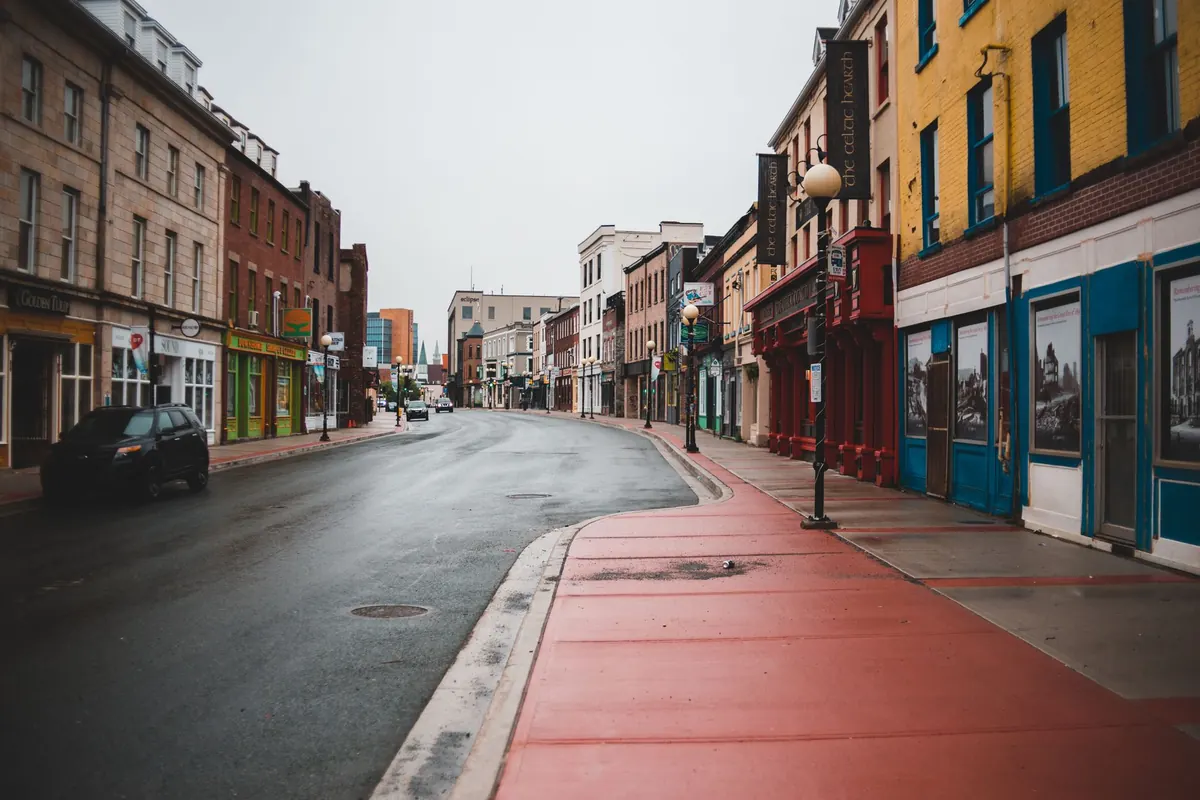
The corner shop two streets from my flat has changed hands four times in six years. A greengrocer became a phone repair counter, then a nail bar, then a small café with two tables and a handwritten menu taped to the inside of the glass. I attended none of these transitions. Nobody did. There was no announcement and no ceremony — just a week of shutters down, then a new sign, and a different smell drifting onto the pavement at seven in the morning.
But if you walk the same route every day, you notice. Storefronts are the part of a neighbourhood that talks back. They tell you who opens early, who is holding on, who painted over the old lettering and who left it showing through. Reading them takes no special training. It takes a pair of eyes and a bit of patience, and the willingness to look at a shop window as something other than a place to buy milk.
A storefront makes a series of small public statements, and almost none of them are meant as statements. The sign says who the owner thinks they are. The window says who they think you are. The opening hours say what they believe about the street at six in the morning and at nine at night.
Consider two shops on the same parade. The first has a painted sign above the door, the kind that takes a signwriter a full day and a proper ladder. The second has a printed vinyl banner tied to the fascia with cable ties, the phone number in the corner still showing. Both may be selling the same thing at the same price. But the first has decided the building is worth a slow investment; the second is keeping its options open. Neither is wrong. They are simply telling you different things about how long they expect to be there.
You can read a street this way for years and never run out of material. It is not gossip, and it is not nostalgia. It is closer to the local reporting that used to happen in the margins of a parish newsletter, before most of it moved online and got shorter.
Look up, above eye level. Old shopfronts often carry the shape of a previous trade in the brickwork or the timber: a bracket where a hanging sign was fixed, a faded panel where a name was painted in the 1950s and painted over twice since. When a new owner sands back the fascia and leaves the old lettering visible, that is a deliberate choice — a small claim of continuity, an answer to the question of whether the new business belongs here.
The window is the most honest part of the shop, because it is the cheapest part to change and the easiest part to neglect. A display that gets rearranged weekly suggests an owner with time, energy and a view about the season. The same items in the same place for eight months suggest somebody working alone and stretched. Neither necessarily predicts success. But a window that grows emptier week by week — a gap where three products used to be, a hand-written "sorry, sold out" that stays up too long — is one of the earliest signals on any street.
Opening hours are a schedule of belief. A shop that starts closing on Mondays is telling you something about staffing. One that extends into the evening is betting on foot traffic that may or may not arrive. And the person behind the counter tells you the rest: an owner who greets the postman by name, a rota of unfamiliar faces, a teenager on a phone, a couple taking turns. Staffing patterns are among the most readable indicators of whether a business is a household project or a small operation with ambitions.
Most of what happens to a high street falls into a handful of shapes. Naming them makes the street easier to follow.
That last shape matters more than it looks. A street can keep all its buildings and lose most of its life, and no single day will feel like the day it happened.
The losses that sting are rarely the famous ones. They are the places that never advertised: the shop that kept a spare key for the neighbour upstairs, the noticeboard by the door with a card for a piano teacher and a lost cat, the bench outside that nobody officially owned. When a business closes, the counter goes. When a role closes, the small infrastructure around it goes with it, and it takes a season or two before anyone can say precisely what is missing.
I notice this most in the evenings. The corner that used to have one lit window at ten at night now has none, and the walk home is a little darker and considerably quieter. No sign announced that. It simply became true.
Read a street long enough and you stop asking whether it is changing, and start asking what, exactly, is being replaced by what.
If you want to understand your own neighbourhood rather than just feel vaguely uneasy about it, keep a simple record. It takes ten minutes a month.
That last part is the practical payoff. When a planning notice appears on a lamppost or a licensing application goes up in a window, the people who can say something useful are the ones who can describe what is actually there.
You cannot freeze a neighbourhood, and you probably would not want to. But you can influence which parts of it survive, mostly through small and unglamorous habits. Buy something, even something tiny, from the shops you would miss — a paper, a coffee, a loaf. Learn two names. Say thank you to the person who sweeps the pavement. If a new place opens where something you loved used to be, give it a fair month before you decide it is a symbol of decline; the owner is usually more tired than you are and has taken a bigger risk.
Pay attention to the notices, too: the licence applications, the change-of-use signs, the consultation that nobody attends. Ten minutes of reading beats an hour of complaining afterwards. And if you have kept that notebook, you will have something better than an opinion — you will have a record of what the street was, what it did for people, and what is worth asking for as it changes.
Walk your usual route tomorrow and look up at the signs. The street has been telling you a story for years, in a very small font, on a very ordinary wall.
Photo: Erik Mclean / Pexels
Noticing the ordinary life around you is a skill, not a talent. A practical guide to watching routines, gestures and...
A practical guide to small-town Italian market manners: when to arrive, how to greet, how to choose produce without...
A practical, calm checklist for your first walk alone through an unfamiliar neighborhood — what to prepare, what to...

Reflections and stories from narrow streets..
