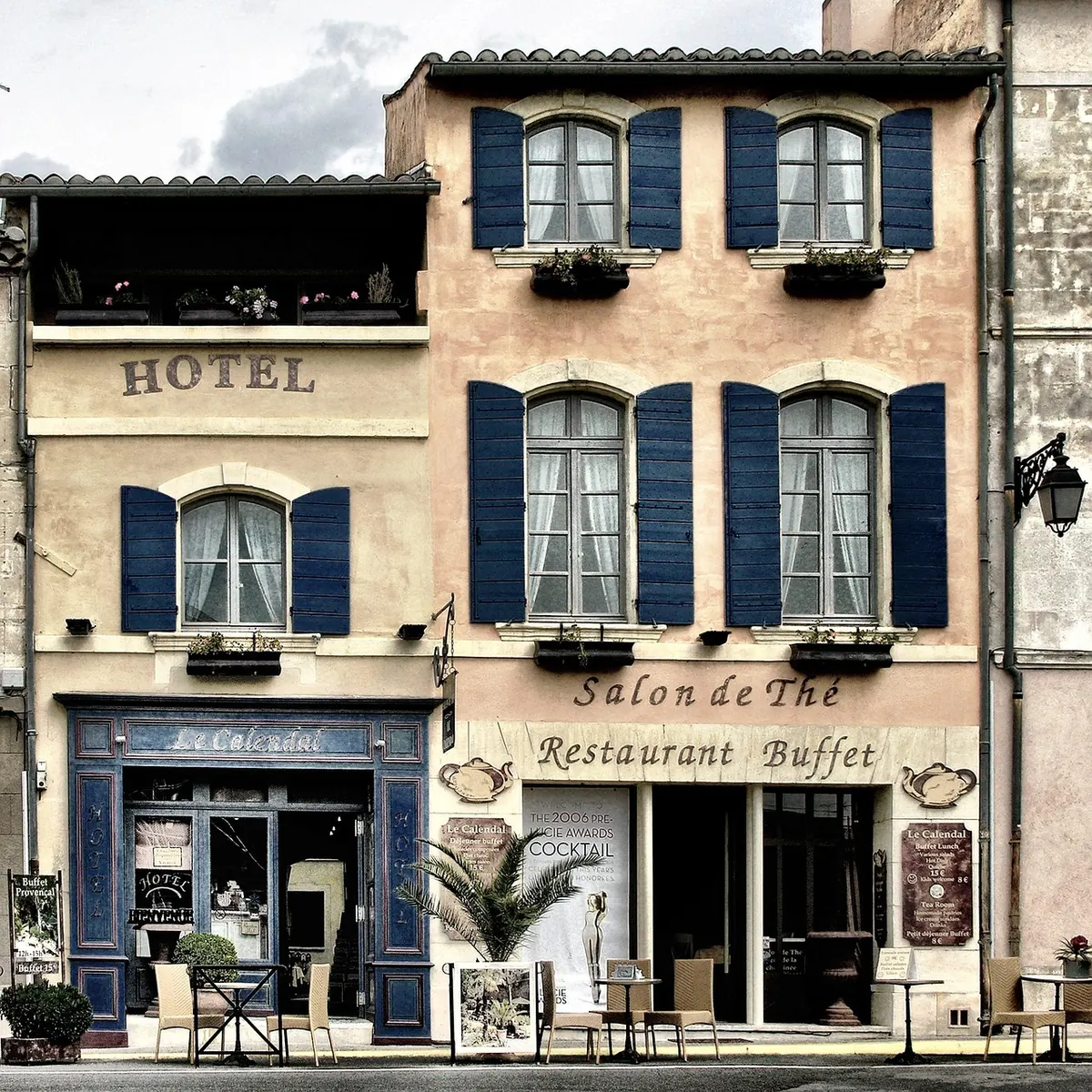
The other evening, waiting for the kettle to boil, I watched a man across the street fold his newspaper into a neat rectangle before tucking it under his arm. Nothing happened. He walked off. And yet that small, pointless moment has stayed with me longer than most of the pictures I took that week. Attention has its own arithmetic: what you simply notice often settles deeper than what you record.
This is about doing that on purpose — observing the ordinary life around you with no camera, no phone in hand and no urge to keep a receipt of everything. It is a skill rather than a personality trait, and it improves with a handful of small habits. You do not need more time. You need a different use of the time you already spend waiting.
Almost everyone reaches for a phone before they have actually looked at anything. The hand moves to the pocket while the eyes are still somewhere else, and by the time the screen is lit the scene has been reduced to a possible picture. Notice that reflex. It usually arrives about four seconds after something catches your eye.
Try this: keep the phone in a bag rather than a pocket when you walk, and put it face down and out of reach when you sit down somewhere. The first ten minutes without it are the worst; the rest is easier than you expect.
Photography is not the enemy. But a camera trains a particular kind of looking — framing, cropping, deciding what would make a good image. That is not the same as noticing what is actually there. The composition in front of you is often less interesting than the unphotogenic detail at the edge of it: the way a man holds his keys, the dent in a bin lid, the two women who always meet on the same corner.
Choose a single spot — a bench, a café window, the step outside your building, the kitchen table at seven in the morning. Go back to it. Sit for twenty minutes with nothing to read and nothing to scroll.
The first five minutes are dull, and that dullness is not a failure. It is the door. Your mind is still running through its list of tasks; the scene in front of you looks like nothing. Stay. Around the tenth minute the ordinary starts to separate into parts: who arrives, in what order, carrying what, taking which route across the square. You begin to see the place as a system rather than a backdrop.
Regularity does most of the work. An unusual event tells you very little; a repeated one tells you everything. When you know that the man with the dog crosses at the crossing rather than the corner, a deviation becomes visible. You have not gained information so much as a baseline.
Every routine has a sequence, and the sequence is where the character lives. Watch a barista for a few minutes and you will see a private order of operations: cups to the left, milk jug rinsed before or after, the small pause before calling a name. Watch a neighbour leave for work and you will see which hand holds the bag, whether the door is locked twice, whether the keys go into a pocket or a bag.
Pick one routine and watch it three times on three different days. Note what stays the same and what changes. The variation is usually the most interesting part — a different coat, a slower walk, a coffee carried instead of drunk inside. You are not collecting facts about strangers. You are practising the habit of seeing a pattern and then seeing where the pattern breaks.
Faces are edited. We arrange them for other people, and most of us do it without thinking. Hands are less cooperative and therefore more informative. They wait, fidget, count, settle, reach too early or too late.
Sit somewhere public for ten minutes and watch only hands. How does a person hold a cup when they are listening to someone boring? How do they fold a receipt? A thumb rubbing the edge of a phone, a hand flat on a table, fingers testing the temperature of a mug before drinking — these are small verbs, and they carry more of a person than a portrait does.
Include your own. Notice the order in which you do things when nobody is watching: where you put your keys, which sleeve you put on first, how you hold a pen that is not writing. There is a whole private grammar in that, and you have probably never seen it.
Atmosphere is made of things you can name once you stop treating them as background. Light is the obvious one — the difference between a room at four in the afternoon and the same room at seven — but sound, temperature and smell do just as much work. A street with a delivery van idling in it is not the same street.
Try this once in any setting. Close your eyes for sixty seconds and count five distinct sounds, from the nearest to the farthest:
Then open your eyes. The place will look slightly different, because you now know something about it that a picture would never show. Do the same with temperature and smell on another day. Warmth from a radiator, cold air at an open door, the smell of a stairwell — these are the parts of a scene a photograph cannot keep, which is precisely why they are worth your attention.
None of this requires an hour of free time. It requires a few deliberate minutes, repeated.
The point is not to become a person who notices things and tells everyone about it. Most of what you see is not for sharing. It simply changes the texture of an ordinary day: the walk to the shop has more in it than it did, and waiting stops being dead time.
Keep the notebook small and the entries short. Writing a line about what you saw is not the same as photographing it. A photo settles the question; a sentence keeps it open, and keeps you looking for the next thing. If a day passes with nothing written down, nothing is lost. The looking was the practice, and the practice is the point.
Start tomorrow with one minute. Stand somewhere you usually rush through, and let yourself be bored for a moment. The street is already full. It has been the whole time.
Photo: LoboStudioHamburg / Pixabay
Shop signs, window displays and opening hours are quiet local records. Learning to read them shows how a...

A practical guide to small-town Italian market manners: when to arrive, how to greet, how to choose produce without...
A practical, calm checklist for your first walk alone through an unfamiliar neighborhood — what to prepare, what to...

Reflections and stories from narrow streets..
