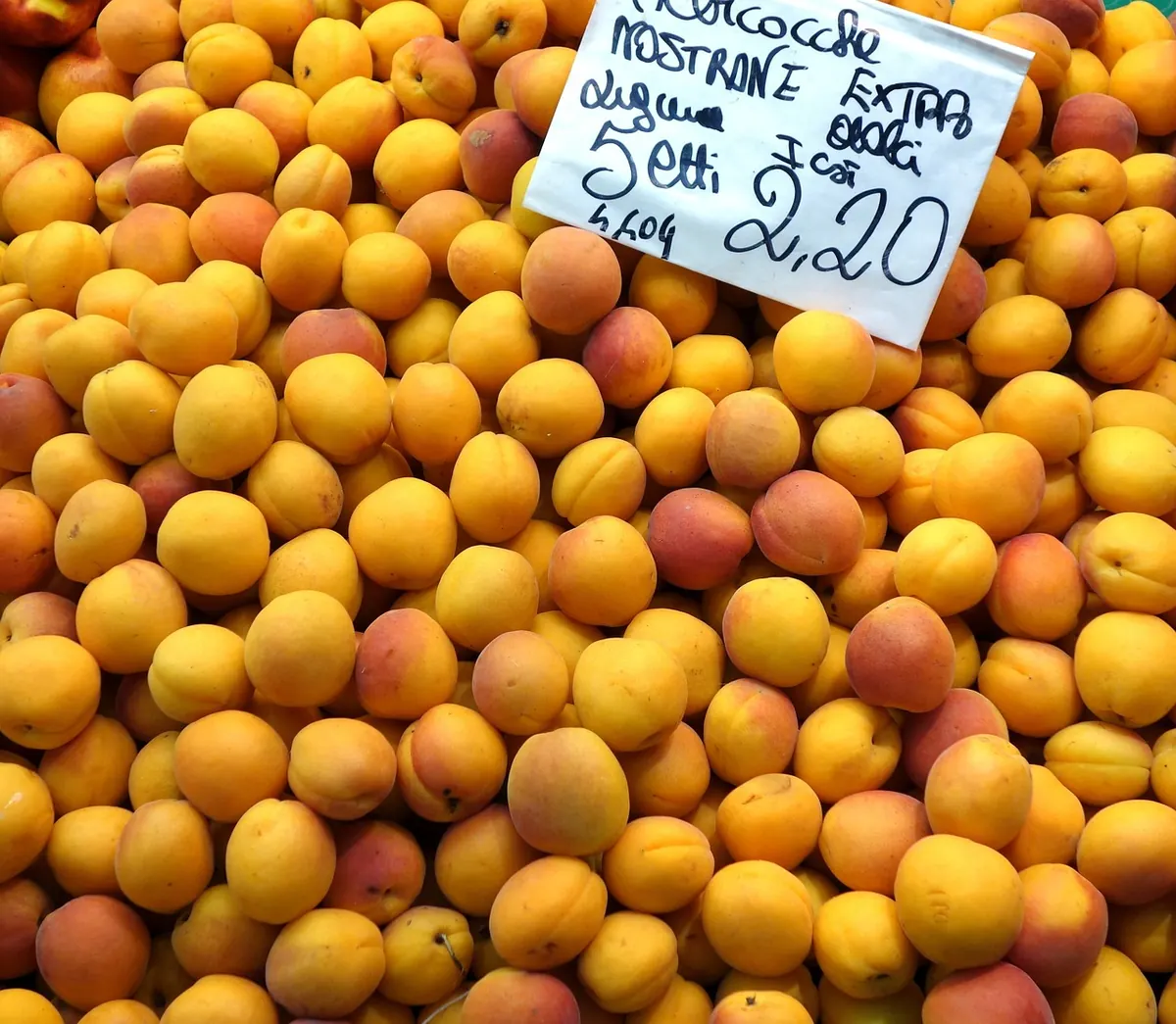
The piazza fills before eight. By half past, there are trestle tables under striped awnings, a van with its back doors open, crates of artichokes stacked three high, and a queue of people who all seem to know each other. In a town of four thousand, the weekly market is not only where you buy a kilo of tomatoes. It is where the town checks on itself. Nobody hands you a rulebook at the edge of the square, and yet every rule is being applied around you, quietly, by people who have been doing this since childhood. Being new is fine. Being careless is what gets remembered. What follows is what the regulars do, so you can stand in that queue without feeling like an interruption.
Town markets usually open around seven or eight and start packing up by one in the afternoon, sometimes earlier. The best produce goes in the first two hours, when the stallholders are still arranging and the light is good. Arriving at twelve-forty means slim pickings, though you may get a friendly discount on what's left. Arriving at twelve-fifty-five with a long shopping list means you're asking someone to unpack what they've just packed away.
Come with cash, and come with the right cash. Small notes and coins are the currency of the market. Handing over a fifty-euro note for a two-euro bunch of parsley at eight in the morning is the sort of thing that gets a sigh, because the vendor's change float is still thin. Bring your own bag or a basket — a folding shopper in your pocket is enough. Stallholders will usually have plastic bags, but regulars don't ask for them. Wear shoes that tolerate straw, mud and a bit of crushed tomato.
Walk up to a stall and say buongiorno before you point at anything. This is not decoration; it is the opening move, and skipping it is the single most common beginner's mistake. A greeting, brief eye contact, then your question. In a small town the vendor will often greet you first, and answering is part of the transaction.
Buongiorno. Mi dica. — Un etto di prosciutto crudo, per favore. — Subito.
If there is a crowd, do not assume a line. Ask chi è l'ultimo? — who's last? — and take your place behind that person. Use permesso to squeeze past someone in a narrow aisle. When you leave, say grazie, arrivederci, even if you bought nothing at all. And do not open with English and a question mark; a greeting in Italian, however ragged, changes the temperature of the whole exchange.
Here is the cardinal sin: hands in the crate. The vendor has built that pyramid of peaches; a stranger's fingers rearrange it, bruise it, and undo twenty minutes of work. Look closely, then ask. Posso? with a gesture toward the fruit is usually enough, and often the answer is a nod. But the better move is to let the vendor choose: point, say how much you want, and add mi scelga lei — you choose for me. You will almost always get better fruit than you would have picked yourself.
Don't squeeze, sniff, snap grapes off the bunch, or shift produce from one crate to another. Tell the vendor what it's for — per stasera, for tonight — and they'll pick the riper ones. Ask cosa mi consiglia? and listen to the answer; advice at a market stall is free and usually honest. If a taste is offered, accept it with thanks. Don't ask for one. And don't request what isn't there: the table in front of you is a summary of the season. A stall with modest tomatoes in October is being truthful with you.
Quanto costa? asks the price per kilo; quanto viene? asks what the total comes to. Learn the numbers up to twenty and the tens, and you'll catch most of what's said. If you don't, say non capisco, può ripetere? rather than switching to loud English. Gestures, a pointed finger and a phone calculator will finish the job politely.
Have your money ready when the bag is handed over. Since you came with coins and small notes, this takes four seconds instead of forty. Money passes hand to hand. Tipping is not expected at a produce stall, and nobody will chase you down the street; rounding up by a few coins is a courtesy, not an obligation.
Don't haggle over food. Bargaining belongs, gently, to the stalls selling bags, belts and kitchenware, and even there it's a light game rather than a negotiation. Never argue over the price of a bunch of spinach. If you need a receipt, ask before you pay rather than after. And if you're short of cash, ask posso pagare con la carta? before anything is weighed — many small stalls are cash only, and finding out afterwards is awkward for both of you. Keep notes out of sight once the transaction is done.
Step out of the aisle to pack your bag. Don't block the table while you chat on the phone. Ask before photographing a stallholder or their display; if you want a picture, buy something first and then ask. If a dog is dozing under a table, ask the owner before petting it. An honest compliment — che bello questo basilico — goes a long way, and so does coming back to the same stall next week. Regulars are made by repetition, not by charm. Learn the vendor's name if it's offered. And don't mistake directness for rudeness: a brisk answer at nine in the morning with twelve people waiting is efficiency, not hostility.
None of this requires fluent Italian. It requires attention: to the queue, to the arrangement on the table, to the person standing behind it. Do that for a few weeks and the market stops being a place where you are new. Someone will nod at you before you say anything at all.
Photo: No-longer-here / Pixabay
Shop signs, window displays and opening hours are quiet local records. Learning to read them shows how a...
Noticing the ordinary life around you is a skill, not a talent. A practical guide to watching routines, gestures and...
A practical, calm checklist for your first walk alone through an unfamiliar neighborhood — what to prepare, what to...

Reflections and stories from narrow streets..
