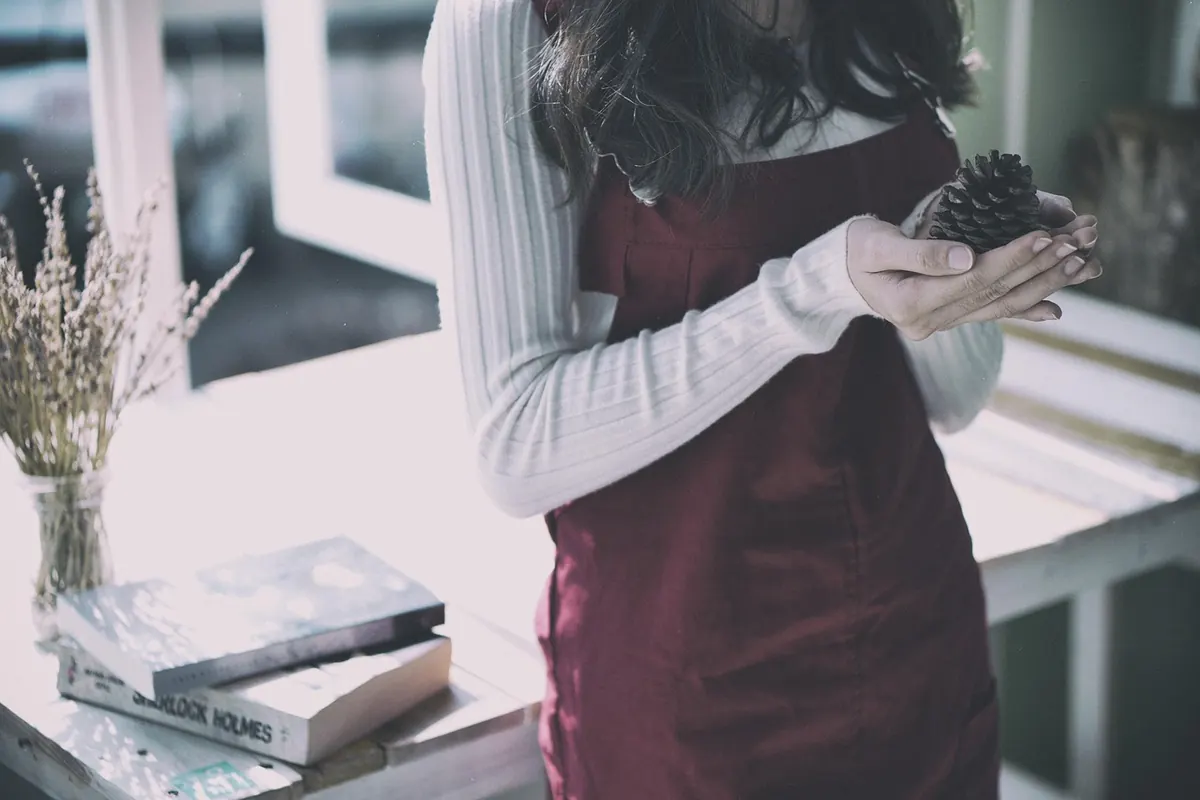
The lamps go on earlier now. By half past five the kitchen window has turned the colour of slate, and the house settles into a different rhythm: kettle, lamp, the same chair pulled a little closer to the radiator. Summer evenings push you outdoors. Autumn evenings hand you back to yourself, whether or not you asked for the company.
That handing back is the useful part. What follows is a small, workable checklist — prompts and rituals, nothing solemn — for making the darker hours do some quiet work without turning them into another task to complete.
For most of the year, the light argues for one more thing. One more hour in the garden, one more lap of the park, one more errand squeezed in because it is still bright enough to bother. Autumn removes the argument. There is nothing to weed at seven in the evening, and nobody expects you to be anywhere.
That absence of expectation is worth using on purpose rather than filling by default with television and a phone. It also happens to suit how reflection works. Good thinking rarely arrives in a bright, busy room at midday. It arrives in a slightly dimmer one, with something warm in your hands and no audience.
The evening doesn't need to be used well. It needs to be used honestly.
The ritual matters more than the prompts, especially on the nights when you are too tired to answer anything properly. The body learns signals quickly, and after a fortnight a lit lamp will start to feel like an invitation. Keep the preparations small enough that you would still do them when you are low on energy.
None of this needs to be beautiful. The blanket can be the old one and the notebook can be the one from last year with three pages torn out.
Sit down with these once a week, or once a fortnight, and answer only the ones that pull at you. Write in sentences if you have the energy and in fragments if you don't. There is no requirement to finish the page.
Some evenings you will arrive at the chair with nothing left. This is the short form, and it counts.
Ten honest minutes beats a planned hour you keep postponing. Three of those minutes might be spent simply staring at the lamp, which is also allowed.
Reflection pays off later, not in the moment. What you write in October reads very differently in March, and that comparison is where most of the value sits.
Date every entry. Keep the notebook in the same place, near the chair rather than in a box under the bed, because a notebook you have to hunt for is a notebook you will abandon by the second week. One page maximum per sitting; length is not a measure of seriousness. And resist reading back immediately. Leave the pages alone until the light returns, then read a few in one go with a cup of coffee and a forgiving mood. The person who wrote them was doing their best with the information they had.
There is a difference between an evening that is restful and one that is flat. If the darker months leave you sleeping badly for weeks, losing interest in things you normally enjoy, or feeling persistently low rather than simply quiet, that is worth mentioning to a doctor rather than working through alone with a notebook. Seasonal low mood is common and treatable, and a conversation about it is not an overreaction. This checklist is a pleasant habit, not a substitute for proper help.
If you take nothing else from all of this, take the sequence. It is deliberately short enough to run on autopilot until it becomes an ordinary part of the evening.
Autumn is generous in this one specific way: it gives you the darkness whether you want it or not. Deciding in advance what a few of those evenings are for — a little writing, a little honesty, an early night when that is the honest answer — is enough. Nothing has to be resolved before the clocks change.
Photo: Pexels / Pixabay
Shop signs, window displays and opening hours are quiet local records. Learning to read them shows how a...
Noticing the ordinary life around you is a skill, not a talent. A practical guide to watching routines, gestures and...
A practical guide to small-town Italian market manners: when to arrive, how to greet, how to choose produce without...

Reflections and stories from narrow streets..